Saturday, October 20, 2012

Aspie-Neuro Relationships and You


This is a piece I've prepared for an acquaintance's journal; figured I'd post it on here to get additional feedback. Thanks.

There’s a moment in the 2009 film “Adam” where the title character (Hugh Dancy), a young man with Asperger’s syndrome, tells his new girlfriend (Rose Byrne) that he can tell that she’s sad but he’s not sure how to respond. “Could you give me a hug?” she asks. “Yes,” he replies. The two stare at each other for a bit, and then Byrne rephrases it “Adam, I would like it if you gave me a hug”.
That scene, fictional though it is, gives, I think, a pretty clear picture of both the struggles and triumphs that can come from being in a relationship and on the autism spectrum. 

In mid-September, I married Raychel, my girlfriend of nearly five years. There’s a lot to like about Raychel: she’s brilliant, sweet and, on issues she feels strongly about, has a temper that isn’t doing cultural perceptions of redheads any favors.  Raychel knew I had Asperger’s syndrome from the beginning of the relationship, but knowing about something and experiencing it can be two very different things; over the course of the relationship, Raychel and I have encountered a lot of problems typical of relationships, both romantic and otherwise, involving a neurotypical and a person on the autism spectrum, and our strategies for dealing with them have been a major part of strengthening our relationship.

            For those who aren’t aware, Asperger’s has several symptoms that can create difficulties in a relationship. One that comes up in most descriptions of the condition is lack of empathy, which obviously can be a big drawback in a relationship, especially in combination with my difficulties with non-verbal communication. While being with me has meant Raychel has had to work on her skills in making sure she clearly articulates what she needs, it’s also forced me to work on my understanding of non-literal, non-verbal interaction (the example I always use is the fact that I just recently realized “bless your heart” is an insult).

            Another Asperger’s symptom Raychel and I have had to work through is my difficulty with changes in routine; when we first started dating, I’d always arrange for us to hang out in the early afternoon, so I could be back to my dorm room in time to watch whatever DVD I’d gotten from the library, or as I referred to it (this is true), “alone time”. Now, there’s nothing WRONG with being set in your ways if they don’t hurt anybody, but anyone who’s been in an adult relationship knows that you should expect to make changes within reason for another human being. That necessity has led me to overcome a lot of the weird little things my Asperger’s makes me take issue with, such as  hugging, making eye contact or just putting down the computer for a second to talk to somebody.

As I write this, Raychel has just taken a job in Greenpeace’s Washington, D.C. office, which will keep us apart for a full month; having had her in my life pretty much uninterrupted for the last few years, I know the separation period is going to be tough, especially given the issues I’ve had with both separation and changes in routine, but at the risk of sounding cheesy, the woman I have to be separated from is a big part of why I know we’ll be okay.

Saturday, September 29, 2012

"Boardwalk Empire" is finally starting to understand its female characters, maybe


***THE FOLLOWING CONTAINS SPOILERS FOR THE FIRST TWO SEASONS OF HBO'S BOARDWALK EMPIRE****

Sorry for the lengthy absence, folks; getting married tends to result in those. Love you, Raychel. Now, on with our regularly scheduled pretentiousness.
Boardwalk Empire is an HBO show about gangsters in New Jersey starring Steve Buscemi, so naturally, comparisons to The Sopranos crop up a lot. I, on the other hand, always felt like, if you were going to pick a prior HBO series to compare it to, Deadwood would be more accurate; both series take a seemingly-played out genre and, using a loosely true-events-based framework, tell a story about how American institutions develop, and how sometimes arguably positive or necessary things are built by hard, violent people. One of the many, many things that made Deadwood a gem was how, even though it had a male-dominated cast and setting, its female characters never felt incidental, and indeed, the show was quite adept at handling gender issues through the prism of its time and place (the second season features one of the most frighteningly realistic examinations of violence against sex workers I've seen on television, period or otherwise).

In this respect, Boardwalk Empire, which recently began its third season, hasn't done nearly as well for itself. Part of this is that, unlike Deadwood, it struggles to figure out female characters' place in a show about gangsters during Prohibition. This is perhaps clearest in the show's female lead, Margaret Thompson, nee Schroeder, nee Rohan (Kelly MacDonald). For the show's first season, Margaret functioned almost like one of the Doctor's companions; she was someone from outside the world the show presents to us, along for the ride because, like us, she didn't understand it. An Irish immigrant, suffragist and temperance-movement foot soldier with two children and a drunken, abusive husband, Margaret came to Steve Buscemi's charismatic political boss/bootlegger Nucky Thompson to ask for financial help due to her husband's gambling; shortly after, her husband beat her into a miscarriage, Nucky had the bastard killed and Margaret soon became his kept woman. As the season drew to a close, Margaret left Nucky after finding out he was responsible for her husband's death, but returned to him shortly thereafter. Margaret's arc in that season was fairly straightforward, but it started to veer off-course in the second; after Nucky's former mentor the Commodore (Dabney Coleman), his protege and surrogate son (and the Commodore's actual son) Jimmy Darmody (Michael Pitt) and Nucky's brother Eli (Shea Wigham) together hatched a plan to get Nucky imprisoned and take his throne, Margaret at first showed intriguing signs of a Lady MacBeth/consigliere relationship with Nucky, but this was completely discarded when her daughter Emily was diagnosed with polio; from this point, Margaret's entire function in the story was to fret about whether or not Emily was being punished for her mother's decision to live in sin with a criminal, which was about as interesting in the long term as it sounds; as the season ended, Margaret married Nucky to invoke spousal privilege at his trial and, in a final fit of Catholic guilt, signed over a lucrative plot of land he owned to the Church.

This character arc was, shall we say, not well-received by a lot of fans, nor was her affair with Nucky's Irish bodyguard (disturbingly, this led to portions of the fandom calling for her death, despite the fact that almost every major character on the show has been banging someone on the side at some point); fortunately, the show seems to have finally found a compelling plotline for her. Some background:a major theme of the new season is Jimmy's warning to Nucky in the series premiere that he "can't be half a gangster anymore", a point driven home in the season 2 finale when Nucky personally killed Jimmy for ordering a hit on him. In the year and a half between seasons 2 and 3, Nucky, thanks to Margaret's land donation, has become a philanthropist as a front for his criminal activity, opening a Catholic hospital on the land; Margaret, in the season premiere, witnesses a young woman stagger into the hospital and miscarry. She later learns that the woman miscarried from drinking raw milk, and becomes concerned with the quality of information on prenatal care available to women, to Nucky's annoyance. Now, it's entirely possible this plotline could go south too, but it's definitely a step in the right direction; first off, it's not out of the blue. Women's health has been shown to be a concern of Margaret's since early in the series, and moreover, Nucky being a full-time philanthropist now ties it directly into the protagonist's arc.

If Margaret's been given short shrift, the show's other female characters have gotten worse; first, there's Jimmy's wife, Angela, an ambiguously lesbian/bisexual (it's never clearly established which, and it''s probably not historically realistic for even Angela to be entirely sure herself) artist. Unfortunately, despite Aleksa Palladino's excellent, sensitive performance, the above was pretty much the extent of Angela's character; her best scene on the show was a lovely conversation with Jimmy's friend Richard Harrow (Jack Huston) a hideously disfigured, socially inept World War I veteran, and it suggested further depth to her character until, in the second season's tenth episode, a vengeful rival of her husband's killed her to send a message (randomly offing a female character AND an LGBT character? Ooh, way to buck convention, HBO).

Still, Angela was less problematic from a feminist perspective than Jimmy's mother, Gillian (Gretchen Mol); it had been established that Gillian was impregnated with Jimmy when she was raped by the Commodore at 13. After having little to do in the first season, she became a big part of the anti-Nucky conspiracy in season 2, actively encouraging Jimmy's abortive hit and filling a similar role to the one it was implied Margaret would play. To the show's credit, even though Gillian has always been a villainous character, it did make an effort to show her as deeply damaged as a result of her assault; in Mol's best scene in the series thus far, she recounts the experience to a bedridden Commodore, concluding by giving him several vicious slaps. It's perhaps Gillian's most humanizing moment; despite her attempt to be coldly calculating about everything, all she feels when it comes to this is perfectly-justified rage. Then, in the penultimate episode of the season, it was revealed that she had seduced her own son while he was a student at Princeton; it was an audaciously creepy thing for the show to do, and of course it makes sense for Gillian to be somewhat fucked up regarding sexuality; that said, it's seemed more and more like she exists to be fucked up than to be a fucked-up rape survivor. (For instance, her current plotline involves her trying to convince Jimmy and Angela's young son that she's his mother, adding "evil stepmother" to the lazy female characterizations the show is slapping onto her.)

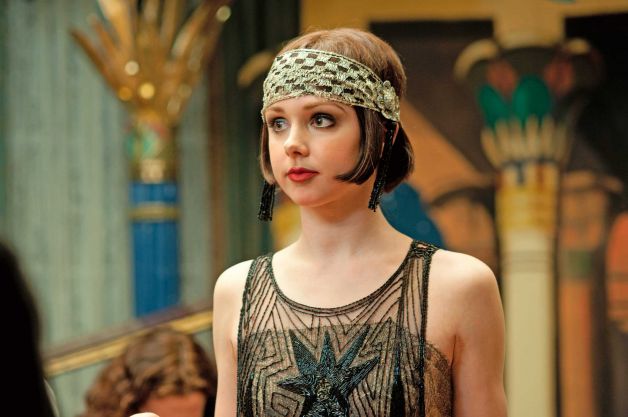
Another good sign for the season is the addition of Billie Kent (Meg Steedle), a flapper who's Nucky's mistress; unlike her counterpart from earlier in the series, Lucy Danziger, a sort of proto-Ke$ha who was pretty much universally loathed and abruptly written off, Kent is intelligent, charming and someone it's easy to see Nucky being attracted to. As opposed to the Lucy-Margaret dichotomy, that of Billie and Margaret isn't a lazy virgin-whore thing; both women have their good points and bad ones, and Billie is independent enough to make clear to Nucky that she's uninterested in being his kept woman (sexual autonomy was, of course, a major theme of the flapper movement- hey, see how easy it is to tie history in with your plot if you actually make some effort?). Even better, HBO's advance episode summaries reveal that this season will feature the return of one of the second's best characters, Esther Randolph (Julianne Nicholson); a witheringly snarky, Katherine Hepburn-esque federal prosecutor, Randolph was based on real-life crusader Mabel Walker Willebrandt, and had some of the best lines in the show ("A lady lawyer?" a particularly dumb cop asks incredulously; "What's next, horseless carriages?" she deadpans. "They already got those," the cop obliviously replies), and was also arguably the best feminist role model yet presented.

If there's one major weakness the show may have in tying these threads together, it's that it really isn't sure how to handle its gender issues in terms of the male characters. Nucky, for instance, was a major backer of women's suffrage, is enraged enough at violence against women to have killed Margaret's husband, and is politically progressive to the point that he at one point berates a crony for making a racist joke, and yet he's shown as in the season 3 premiere not only dismissing Margaret's concerns about prenatal health, but, asked his opinion on a female pilot, snaps that she "should spread her legs and leave spreading the wings to her husband". It's possible that this is again meant to represent the whole going-full-gangster thing, but showing willingness to cap a guy's ass leading to gratuitous sexism seems like kind of a weird bit of character development). Even at its best, tying all of its threads together seamlessly has always been a weakness of this show, but the vast majority of those threads are so intriguing that I'm hopeful the show finally has something to say about women's issues, even if the next scene is the guy with half a face shooting someone.

Tuesday, August 21, 2012

Todd Akin didn't "misspeak"

Anyone who's been paying attention the last couple days has by now heard senatorial candidate Rep. Todd Akin's (R-Mo.) remarks on local TV about how an abortion ban shouldn't have an exception for victims of rape or incest, because in cases of "legitimate rape", "the female body has ways to try to shut that whole thing down." (Is there any better summary of the patriarchal right's simultaneous fascination with and contempt for women's bodies than describing conception as "that whole thing"?) Since then, Akin, who was eight points ahead of his incumbent opponent Sen. Claire McCaskill the day of the interview, has been receiving a well-deserved, bipartisan excoriation. His critics on the right have included Mitt Romney, Massachusetts Sen. Scott Brown (although one wonders if he would have bothered if he weren't facing a popular opponent in a blue state) and National Review hack Ramesh Ponnuru, and the Republican National Senatorial Committee has pulled their support from his race. Even Sean Hannity, who has whined that covering Viagra is totally different from covering contraception because erectile dysfunction is "a medical problem", tried to get Akin to withdraw* from the race. Akin still has his defenders, of course; they include red-faced blowhard Erick Erickson, who thinks what Akin said is totally okay because NOBAMA kills babies and Bryan Fischer of the American Family Association, who assures us that, in the words of Ron Burgundy, "it's science" (Fischer, it should be noted, also does not believe that HIV causes AIDS).

Inexplicably, Akin doesn't seem to find the support of such towering intellects heartening; he's been doing frantic damage control, insisting that he "misspoke" and cutting an ad in which he simultaneously apologizes and vows to stay in the race. In the ad, Akin insists that "the mistake I made was in the words I said, not in the heart I hold." Well, golly, Todd Akin, that seems legit; if only you had some manner of record in Congress to draw on, so that we could determine whether or not this kind of thing is, in fact, in the "heart you hold".

Oh, whoa, check it out, guys: turns out he does! I KNOW, right? So apparently, Akin and some guy named Paul Ryan co-sponsored the "Sanctity of Human Life Act of 2009", which would give fertilized eggs the same rights as non-gummi people, presumably even if they were the product of "legitimate rape". Weird. Oh, and Akin and Ryan, the Mulder and Scully of protecting you from your own whore-slit, were also behind the 2011 "“No Taxpayer Funding for Abortion Act". If you missed this dandy, it took the existing prohibition on federal funding of abortion except in cases of rape and incest and narrowed it to "forcible rape". And he proudly touts the endorsement of America's mean, judgy grandmother Phyllis Schlafly, who does not believe it's possible for a man to rape his wife. I know what you're thinking: "Hey, wow, it's starting to sound like maybe Akin implying that there are less heinous forms of rape is, in fact, a well-established part of his ideology rather than a momentary poor choice of words!" The reason you think that is because you kill babies and are probably a lesbian.

(Akin has since clarified that by "legitimate rape" he meant- you guessed it- "forcible rape". Tough shit, Amanda Palmer.)

In the first poll taken since Akin's meltdown, his eight-point lead over McCaskill, widely considered to have been the most vulnerable Democrat in the Senate, has dwindled to a single-point lead. It remains to be seen if his slide will continue, but either way, the cat's out of the bag. Akin said something he didn't mean to say, all right, but it's not that he didn't believe it, it's that he's just too insulated (and let's face it, kind of stupid- I mean, what else can you call a guy who thinks rape makes women excrete spermicide?) to realize that he believes a lot of stuff that non-crazy people find horrifying.

*giggity

Tuesday, August 7, 2012

Race, Sex and the Olympics


No matter how much we protest that we just want to be entertained, the Olympics have always been political. Sometimes national and international affairs violently shove their way into the Games themselves, as in 1972 or 1996; sometimes, the actual events serve as proxies for international tensions, as in 1936 or 1980. This year, however, is unique because we've reached such a saturation point, in terms of both mainstream and independent media coverage, that more individual stories can come to the forefront in less time than ever before. And a couple of the stories, and the focus thereof, are revealing just how fucked-up our priorities still are.

Gymnast Gabby Douglas is obviously one of the conquering heroes of these particular Olympics; Douglas is both the first black woman to become the individual all-around champion and the first American to win the gold in both team and individual all-around competitions. And because we are stupid, we have decided that all of that is irrelevant because Ms. Douglas is black and has natural hair, and OHMIGOD IS IT GOING TO KILL US ALL WHERE IS THE CHANGE YOU PROMISED, NOBAMA?!

No, come back, this is seriously a thing in the 21st century. See, first, people on social media (because everyone is using some form of social media now, and morons are a necessary subset of "everyone") started going after Douglas for how she wears her hair. So, you know, the next time somebody insists there's no such thing as white privilege because they don't get their own history month, ask them this: "How many times, white dude, has someone taken issue with your hairstyle because it doesn't do a sufficient job of disguising the fact that you're white? And remember that you're just an average guy; imagine you are the first person to do two different things, and people are still debating whether or not your hair is okay". (You do not have to say this to that person if you don't want to, because this person is probably pretty awful and I totally understand if you don't want to keep talking to them.)

Douglas has taken the barbs like, if you'll excuse the simile, a champ, saying ""I'm going to wear my hair like this during [finals]. You might as well just stop talking about it." Her response is badass, succinct, and taking the high road all in two sentences, but that doesn't make it any less disturbing that the existence of a black woman's hair is a controversy that must be addressed in 2012.

But wait! There's more! In fact, Douglas has found herself as a lightning rod all sorts of stupid shit; recently, on Fox News ("Oh, Jesus" you think; you are right to think that), radio host David Webb noted that he haz a big sad because Douglas' leotard wasn't flag-patterned.  No, seriously, stop laughing; he actually lamented that we had "lost... that jingoistic feeling", either because he doesn't understand what "jingoistic" means or because he knows exactly what it means. In the future, if I ever have kids, when they ask me the difference between patriotism and nationalism (I am assuming my kids will be nerds), I'll respond, "Well, kids, patriotism is being proud that a woman who's representing you in front of the whole world made your country look good; nationalism is being pissed off that she didn't do it in clothes made out of a flag."


"Okay, so, racism," you say. "But what about sexism, which is tolerated and accepted in public in even higher levels than racism?" You don't miss a trick! Meanwhile, over in the world of weightlifting, Conan O'Brien, who is rumored to be funny much the same way eating Pop Rocks and drinking Coke is rumored to make you explode, tweeted “I predict 350 lb. weight lifter Holley Mangold will bring home the gold and 4 guys against their will.” Ha ha! Get it? It's funny because you have a tiny penis! Meanwhile, in response to her own experiences with sexism, Britain's Zoe Smith posted on her blog:

[We] don’t lift weights in order to look hot, especially for the likes of men like that. What makes them think that we even WANT them to find us attractive? If you do, thanks very much, we’re flattered. But if you don’t, why do you really need to voice this opinion in the first place, and what makes you think we actually give a toss that you, personally, do not find us attractive?
This is perfectly stated, and it really brings to light the more disturbing implications of body-snarking on people like athletes: when you criticize someone like Holley Mangold simply for not making you want to fuck her, you're saying that  you believe that, as a woman, that's her only purpose, even though she's one of the best people in the country at what she does.

I've heard Adele express similar sentiments to Jones' in response to fat-shaming, asking, in so many words, what her physical appearance had to do with the quality of her music; it just seems to have even more of a triumphant take that-ness coming from a woman who could snap me across her knee, Bane-style. (I think Adele could probably kick my ass too, I just doubt that she'd do it in so drastic a fashion. I should note that I've been wrong before.)

 This is what we mean when we talk about the white supremacist patriarchy; it's not just that sexism and racism find their way into our national and international politics, it's the fact that they find their way into completely unrelated things; it's the idea that your worth is determined by your physical appearance, even as you're doing something better than any of us could. It's the desperate, hateful Othering of the people we're ostensibly chanting "USA!" for. At the rate we're going, if we really want a team that can fully represent us in 2016, maybe we should lobby for Douchebaggery to be made an official event.

Thursday, July 26, 2012

James Holmes probably one of them autistics, Joe Scarborough speculates responsibly

 "I'm not a high-functioning sociopath, I'm an Aspie, get it right."

I generally try to stay away from all cable news channels, for different reasons. Fox is Fox, MSNBC wants to be a liberal alternative to Fox but they think that all that means is having a bunch of their own loud dicks to compete with Fox's (I'm excluding Rachel Maddow, who is, for all intents and purposes, Wonder Woman), and CNN is utterly terrified of being accused of bias, to the point that they hired a conservative blogger so comically privileged that he thinks of himself as a working stiff because he's responsible for a blog AND a talk radio show.

So, anyway, I didn't learn until a couple days after the fact that MSNBC's congressman cum morning show idiot (that's a specific kind of idiot that all of these channels are required to have, apparently-- you're still waking up, you don't care) Joe Scarborough had said of James Holmes, the accused shooter in last week's Aurora, Colo. massacre:

As soon as I heard about this shooting, I knew who it was. I knew it was a young, white male, probably from an affluent neighborhood, disconnected from society -- it happens time and time again. Most of it has to do with mental health; you have these people that are somewhere, I believe, on the autism scale. I don't know if that's the case here, but it happens more often than not.
I'm not sure if it's a step up or a step down that it's apparently now de rigeur to identify your baseless speculation as such while you're doing it, but either way, JESUS, Joe.  After anything like this happens, it's true that people immediately start scrambling to find something that they think explains why the shooter did it, and they invariably come up with all kinds of things (except the ready availability of guns because WHY DO YOU HATE FREEDOM?), and yes, because we are judgmental dicks who don't understand much, mental/neurological health issues are one of the things we tend to settle on. I was a senior in high school after the Virginia Tech massacre, and I remember hearing similar speculation about Seung-Hui Cho; I'll never forget a few days after, when a classmate said he could totally see me snapping and doing something similar. Weirdly enough, he was joking, in what he apparently thought was a good-natured way, and I'm not even sure he knew I was on the spectrum, but it was still a weird, early brush with the idea that behavior I perceive as normal can frighten other people.

Another really irresponsible thing about Scarborough's statement is that his descriptions ("disconnected from society") combined with what Holmes has done make it sound like he's equating being on the autism spectrum with being a sociopath. Indeed, his "profile" of the shooter brings to mind Leopold & Loeb or the Menendez brothers. Yes, it's true that autism spectrum disorders usually involve having issues with empathy; that said, in the context of autism or Asperger's, that generally means things like honesty to the point of rudeness, or failing to notice that somebody's upset. Not really the same thing.

Like a lot of disabilities, we stigmatize autism on two levels: kids (or uneducated adults) don't get that the weird kid who really likes Star Wars and has to arrange his pencils by height has a neurological disorder; they just know he's the weird kid, and when you're young, even if you're not a bully, you can have a difficult time processing the idea that somebody has a disability that you can't identify by looking at them.

The second level is adults who understand that autism is a thing, but have no experience with it beyond what they're told in the mass media, which, in its current form, is all about packaging the densest, shortest version of everything, nuance be damned; that's the reason so many adults, upon being told that I have autism, say "Oh, like Rain Man!", and also why I usually have to clarify "No, more like Sheldon Cooper/Spock/Abed." And now those same people have added "mass murderer" to their mental word-association algorithm.

And another really horrible thing that a lot of people haven't talked about is the effect this kind of thing has on actual autistic people. If you read Scarborough's remarks, despite their stupidity and insensitivity, he's clearly not saying that Holmes is definitely autistic, or that people on the spectrum are by definition spree killers. But did he ever consider that a person with a disorder that affects their communication skills and how they perceive the meaning of what people say might not catch that?

Scarborough has since apologized, albeit in that all-too-common "I'm really sorry you were too dumb to get what I meant and also my son has it" way; one hopes that, regardless, he'll be a little more careful and a little less Scarborough-y in the future.

I want to add that I know the events in Colorado aren't about me and my victimization, and I really don't mean to come off that way; my main reason for writing this, rather, is the fact that when something horrible happens suddenly, ignorant shit like this precisely the wrong direction to go in for both the healing process and understanding how it happened in the first place. If you want to help the victims and their loved ones, I encourage everyone to check out some of these resources.

Saturday, July 21, 2012

"The Dark Knight Rises" is not all that political, and that's okay

***THIS POST CONTAINS SPOILERS FOR THE DARK KNIGHT RISES***

I understand that it's tough to discuss The Dark Knight Rises without discussing the tragedy in Aurora, CO; that said, I'm not going to go into that in this post, because trying to detach myself from something like this long enough to try to analyze it any scholarly fashion isn't really something I'm emotionally capable of, particularly after reading about Jessica Ghawi; that said, I did want to talk about the movie itself, even though I think to some extent it will always be associated with the shootings (much like its predecessor was inextricably linked to Heath Ledger's death even before it came out).

 Before the Aurora incident, it seemed like the movie's politics were going to be a flashpoint; Christopher Nolan considered filming footage of Occupy Wall Street at one point before deciding against it, and Rush Limbaugh infamously took a break from calling women who use birth control prostitutes to claim that the movie's villain, created in 1993, was named Bane as an attack on Mitt Romney. And when The Dark Knight was released four years ago, there was a lot of speculation that that film was meant as an apologia for Bush-era War on Terror policies (I'm of the belief that those connections are intentional, but not as a promotion of them, simply confronting us with the fact that if someone like Batman was real, those would probably be the kind of tactics he used.) It's somewhat surprising, then, that the movie itself doesn't really have any clearly-defined politics, so much as vague political undertones that drive an apolitical story. Bane's plan, in which he engineers an uprising using economic inequality and the fallout from the revelation of how Harvey Dent really died, and exploits that to create something approximating the Reign of Terror in France (Gary Oldman's Jim Gordon actually reads from A Tale of Two Cities late in the film), seems vaguely like reactionary warnings about things like the Occupy movement, but there's far more to it than that.

Nolan's Bane, you see, is effective at what he does because he's great at getting people to see them how they want him to see him. When he begins putting his plan into place, he's allied himself with a corporate weasel (the criminally underrated Australian actor Ben Mendellsohn), who doesn't seem to think of him as anything more than muscle.  When Bane inevitably turns the tables, Mendellsohn impotently rages that he's "in charge". "Do you feel in charge?" Bane asks, looming over him, in one of the most effectively chilling moments in the film. So it goes with Bane's army, and the civilians he inspires: he gets people to believe they want the same thing, and then uses it as a way to get what he really wants. He's not an actual true believer among either the 1% or the 99%; he simply manipulates everybody. (Appropriately enough, his first act onscreen is killing Petyr Baelish.) Once Bane has actually put his plan into place, establishing martial law, cutting Gotham off from the rest of the country and burying its police in the sewers, the class conflict aspect becomes immaterial; in fact, after the uprising, we never see any further civilian participation in Bane's plan.

It's not as though the film is unsympathetic to the have-nots; in one quietly brutal scene, Joseph Gordon-Levitt's rookie detective, asking questions at a boys' home, learns that most of the residents simply age out and end up in the streets, and that the home is short on resources because it's run by profits from the business that a now-reclusive Bruce Wayne has been neglecting. (This, incidentally, is, I think, one of the major weaknesses of Nolan's Batman films; we're repeatedly told secondhand about how the economic downturn has ravaged Gotham's citizenry, but we really have no human window into those effects. The closest we've got is Anne Hathaway's Selina Kyle, and can we really call a master thief emblematic of the commoners?)

Really, the film's overarching themes are far more universally applicable than anything political; this is largely a film about chickens coming home to roost, and the undeniably populist idea that people should be trusted with even the ugliest of truths. Even though he doesn't genuinely care one way or the other, Bane is perfectly right that Gotham's new status quo is based on a lie (the film depicts Gordon-Levitt's sympathetic character as outraged about it himself), and mending the damage caused by it not only requires acknowledgment of the truth (and also a big-ass tank-plane), but leads to further acknowledgment of the truth (Batman finally being considered a hero). It's a movie that takes a lot of the questions we thought The Dark Knight was posing and then answering for us and removes that certainty, which is appropriate for a franchise (or at least, an incarnation of one) that has been, in large part, about turning our ideas of what a Batman movie, and a superhero movie, should be on their heads. Of the three, I'd still say The Dark Knight is the strongest, but this is a helluva way to end Nolan and Bale's tenures.

Monday, July 16, 2012

"Breaking Bad" and the continual fascination of villain protagonists

The following contains spoilers for AMC's Breaking Bad.

This post is not a post about how gosh, there sure are a lot of anti-heroes on cable. Those are played out, and have been played out since the first wave of them were written when The Sopranos first started to hit its stride, and again in response to The Shield. Rather, this post is about a character who's distinct from the anti-hero, and understanding this distinction is key to understanding a show like Breaking Bad. See, Walter White, the chemistry teacher cum cancer patient cum meth kingpin who is the series' protagonist, is not, strictly speaking, an anti-hero at this point; an anti-hero is a character who lacks heroic qualities, but is, in most cases, working towards a goal we can get behind. Gregory House is a douchebag to pretty much everybody, but that doesn't mean we're against him helping patients, or that that isn't a worthy goal on his part; Dexter is either a sociopath or a psychopath depending on how he's being written (TV writers and people who know anything about psychology don't seem to be demographics with a lot of overlap), but if there's such a thing as a constructive outlet for that, he's found it. Nucky Thompson is a bootlegger and a crooked politician who murdered the closest thing he had to a son (well, second-closest), but we're still rooting for him because he's kind to his wife and her children, he can't abide spousal or child abuse and his adversaries are, for the most part, total bastards.

Compare that to guys like Tony Soprano or Vic Mackey. Tony was probably the most compelling character on his show, certainly the most charismatic and entertaining, but did anybody really want him to achieve his goals? We rooted against people like Phil, Livia and Ralphie who threatened to fuck up his world, but it wasn't because (with the exception of the latter) they were necessarily worse people than he was, it was that Tony was the guy we were along for the ride with, and he was fun-or at least interesting- to watch.  There's a similar situation with Cersei Lannister in A Song of Ice and Fire; even now that we're seeing things from her perspective, she's not a sympathetic character, but she's turned out as such an epic fuckup that we want to see what happens next. But despite all that, if a character like Tony or Cersei were to be killed, it would be hard to argue they didn't deserve it.

What's interesting about Walter White is that he's essentially migrated from anti-hero to villain protagonist. For the first 1.5 seasons, nobody's going "fuck yeah! Cook that meth, Walt!" but we certainly don't judge a dying man who's doing drastic things out of a desire to provide for his family too harshly. As the series progresses, though, we see Walt let a woman die an easily preventable death because she's blackmailed him, bully his protege into murdering a decent guy (not out of any malice, but because his continued existence puts Walt in danger) and, most infamously, in the finale, poison a child to get Jesse back in his corner. And the worst bit, of course, is that Walt has been cancer-free for a while now; he's in the game for no real reason beyond the fact that it makes him feel more powerful.

That's the Walt that we open the show's fifth season with, and yet the show's as compelling as ever; it's an artful bait-and-switch that it's hard to imagine many shows pulling off.  Dirty Harry is one of the all-time great anti-heroes, but would you watch a movie where he joins the mob? Or if Tyrion Lannister decided Joffrey had the right idea about things? That's the thing about this particular show; even though it still has some sympathetic characters (coming from the other direction, did you ever imagine in the early episodes that there'd come a time when Jesse was more vulnerable and sympathetic than Walt?), so much of its continued appeal is morbid curiosity about how Walt is inevitably going to fuck up his newfound dominance (I mean, has the man EVER had a triumph that didn't lead to him vastly overestimating his ability?). And it still works. Even in an age where TV anti-heroes have become the rule rather than the exception, it takes some great writing and acting to have a TV show make us want to keep watching for a full season after they've blown their apparent Big Bad's face off. Because really, if you had a choice between going inside the head of Al Capone and the head of Eliot Ness, which one would you be likely to go with? Assuming you know you could leave when you were done, of course.